The flux between caring for humans and caring for animals has tugged at Scottsdale's Ed Boks since his youth.
Growing up in Grosse Pointe, Mich., he says he had more animal friends than human friends. He would find and return lost pets to their owners, and in eighth grade he got an after-school job at an animal hospital. Later he worked his way through high school and Wayne State University (English major) in Detroit as a veterinary technician.
At 21, he had a spiritual change of heart and trained to be a minister, eventually becoming a lay pastor at Grace Chapel of Phoenix in 1977.
Now, he sees a deep connection between his work with animals and his religious beliefs.
Since 1998, Boks, 51, has been looking after animals again as the executive director of Maricopa County Animal Care and Control.
His programs are credited with establishing the lowest animal euthanasia rate and the highest pet adoption rate in county history. His goal is to make Maricopa County a 100 percent no-kill area for strays. The agency rescues 60,000 dogs and cats per year, Boks says.
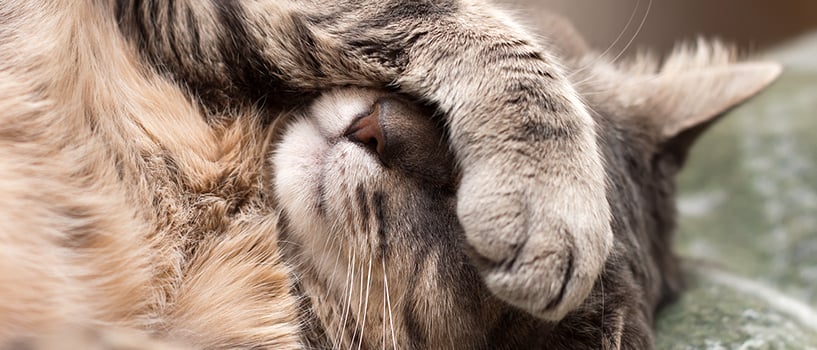
Boks' latest innovation is "Operation Felix," a humane program for dealing with feral cats, developed over the past year. Feral cats are cats that won't approach humans and won't let humans approach them. Felix stresses a method that is becoming increasingly popular nationally called TNR. It is called that because it involves trapping, neutering and returning feral cats to designated feeding colonies managed by trained volunteers.
Eventually, the TNR process decreases the cat population, stops the spread of disease and eliminates the caterwauling and spraying related to mating, says cat welfare advocate Becky Robinson, head of Ally Cat Allies in Washington, D.C.
Oddly, killing cats results in more cats. Studies show that when feral cats are eliminated from an area, new cats move in to feed on whatever the original group was eating - with no competition. But when feral cats are neutered and returned, new cats are kept at bay and the feral cat population eventually dies off.
Where there are feral cats, there are people who feed them. That's where Operation Felix gets its volunteer caretakers.
"We want these people to know what they're doing is a good thing, and to bring them into the program," says Boks, sounding a bit like the preacher again, welcoming souls.
Asked to account for his 1993 switch from the church to animal welfare, Boks says he was following his passion. But he doesn't see it as a fundamental shift from what he had been doing.
"We all live by our spiritual principles and beliefs," he says. "I wanted to take my faith out of the four walls of the church and into the community." He sees the no-kill goal and the agency's new programs as part of the spiritual mission.
"It's Christian. One may think of Christianity narrowly, but Christian principles are much broader. They involve responsibility and reverence for life, caring about man and creatures, and alleviating pain, suffering and death through acts of service."
Boks's transition from human to animal flock has indisputably helped the dogs and cats. But it hasn't been easy.
"It takes a willingness to turn your world upside down and to leave the conventional things you do every day without losing your foundation," he says.
As the mission proceeds, Boks points to another life change. In December, he became a vegetarian.
"It's difficult to take care of animals all day and then go home and eat them," he says.